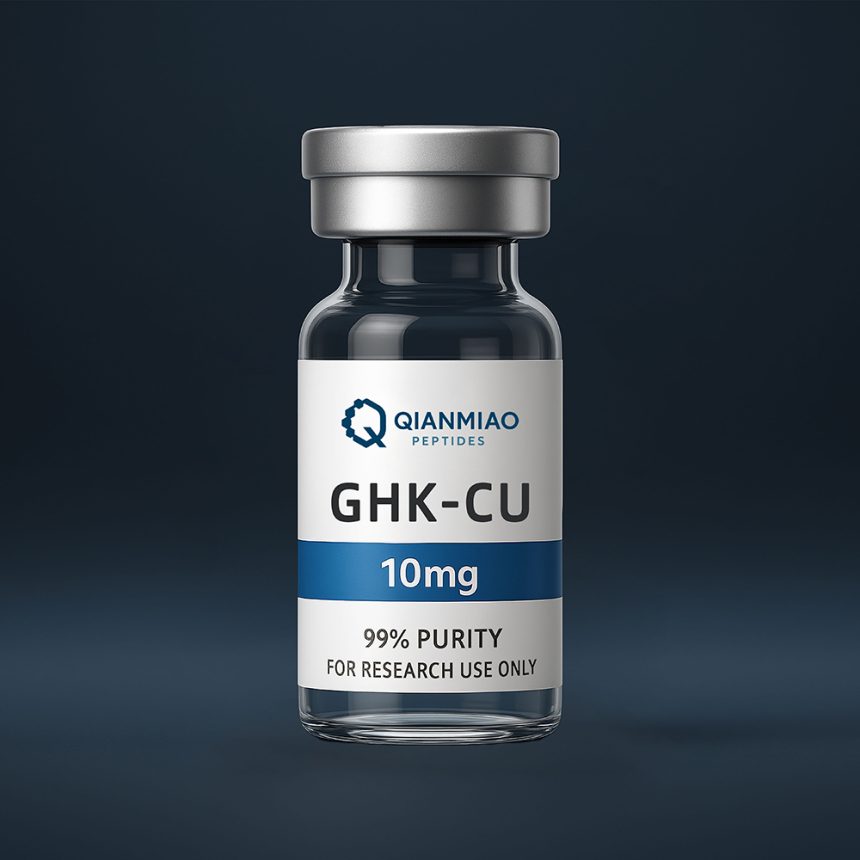
GHK-Cu copper peptide is a well-known bioactive compound widely studied in the fields of biochemistry, dermatological science, and regenerative research. As a complex formed between the naturally occurring tripeptide GHK (glycyl-L-histidyl-L-lysine) and copper ions, GHK-Cu copper peptide has attracted significant attention for its potential biological properties and applications in controlled laboratory environments. Today, high-purity research-grade GHK-Cu copper peptide is manufactured under stringent quality standards to meet the demands of pharmaceutical and institutional research.
GHK-Cu copper peptide is produced using advanced synthesis and purification techniques to ensure consistency, stability, and accuracy. Each batch is manufactured under controlled quality conditions, typically adhering to strict laboratory protocols designed for pharmaceutical raw materials. These processes help maintain high purity levels and minimize impurities, which is essential for reproducible research results. For research institutions and laboratories, product consistency is critical in evaluating biochemical pathways, cellular interactions, and formulation studies.
This research-grade compound is available in convenient specifications of 10 mg and 50 mg, allowing flexibility for different scales of laboratory work. The 10 mg specification is often suitable for preliminary experiments, pilot studies, or small-scale in vitro assays. Meanwhile, the 50 mg specification supports more extensive testing, formulation development, or repeated experimental procedures. The availability of multiple sizes helps researchers optimize resource allocation while maintaining cost efficiency.
In pharmaceutical research contexts, GHK-Cu copper peptide is frequently examined for its role in peptide signaling, metal ion transport, and cellular communication pathways. Researchers may investigate its interaction with extracellular matrix components, gene expression mechanisms, or oxidative processes under controlled laboratory conditions. Because copper plays a key role in enzymatic reactions and tissue-related biological processes, the GHK-Cu complex serves as a valuable model compound in experimental pharmacology and molecular biology research.
Quality control is a central aspect of manufacturing GHK-Cu copper peptide. Analytical methods such as high-performance liquid chromatography (HPLC), mass spectrometry, and purity assays are typically employed to verify molecular integrity and concentration accuracy. Proper storage recommendations—often in low-temperature, moisture-controlled environments—help maintain compound stability throughout its research lifecycle. Institutions working with pharmaceutical raw materials understand the importance of maintaining chain-of-custody documentation and standardized handling procedures to ensure reliable outcomes.
It is important to emphasize that GHK-Cu copper peptide supplied in research-grade form is intended exclusively for laboratory research and pharmaceutical raw material use by qualified institutions. It is not intended for direct human consumption, clinical treatment, cosmetic application, or over-the-counter use unless specifically approved and formulated under regulatory frameworks. Research materials must always be handled by trained professionals in appropriate laboratory settings, following applicable regulations and safety protocols.
As scientific interest in peptide-based compounds continues to expand, GHK-Cu copper peptide remains an important subject of ongoing investigation. Its defined molecular structure, well-documented biochemical background, and compatibility with various analytical techniques make it a versatile compound in experimental research environments. With high-purity specifications available in 10 mg and 50 mg formats, researchers have access to a reliable pharmaceutical-grade material designed to support rigorous scientific exploration.
For laboratories seeking dependable peptide compounds for controlled studies, GHK-Cu copper peptide represents a standardized and quality-focused option aligned with modern pharmaceutical research requirements.